Historic weaving room, Laurel Cotton Mill, Mississippi, January 1939 · Photo: Russell Lee / Library of Congress
Airjet LoomsTimed air jets carry the weft through the open shed; the reed beats each pick into the fabric.
Waterjet LoomsA controlled water jet carries the weft through the open shed; the reed beats each pick into the fabric.
Technical & Service SupportBacked by an experienced technical team, we provide professional online technical consultation and reliable after-sales support, including spare parts supply.
Product Lines
Choose the right loom for your fabric and production target.
Start with fabric material: waterjet looms are designed for polyester, nylon, and synthetic filament fabrics;
airjet looms support cotton, blends, denim, and home textiles.
Airjet Loom
Advanced Airjet Loom with a Super Beating System
A practical air jet weaving solution for buyers who need production speed,
stable operation, and clear technical communication before placing an order.
Suitable for cotton, blended fabrics, denim, and home textile projects.
Configuration discussion based on fabric type, reed width, and factory needs.
Designed for buyers comparing performance, reliability, and export service.
Waterjet Loom
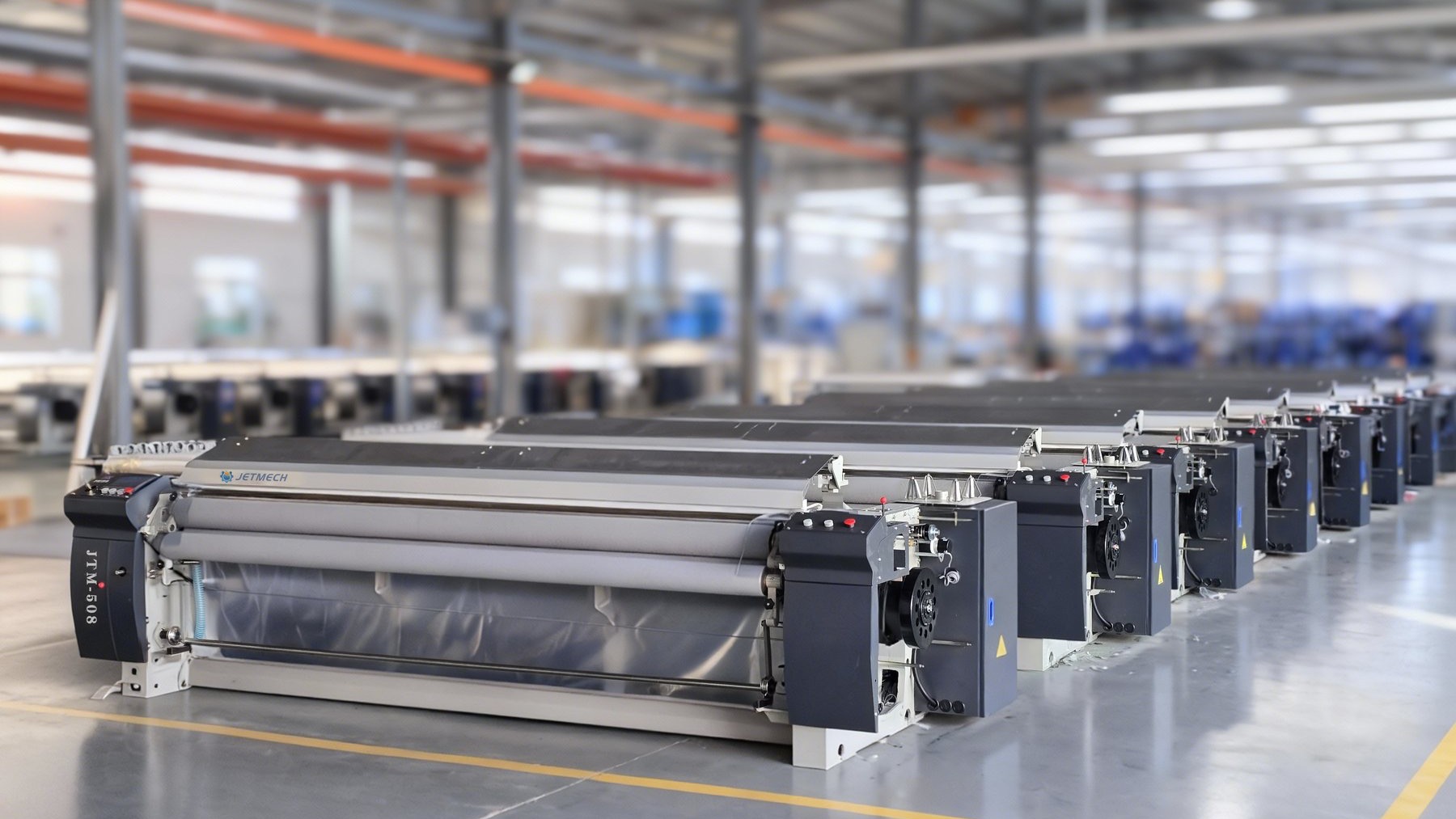
Waterjet Loom Model JTM508-Super Heavy Body
A waterjet loom range for synthetic filament fabric production, built for customers
who need clear model positioning and project-based quotation support.
Suitable for polyester, nylon, and other filament fabric applications.
Project matching for fabric requirements, workshop layout, and target output.
Export communication for configuration, quotation, packing, and delivery planning.
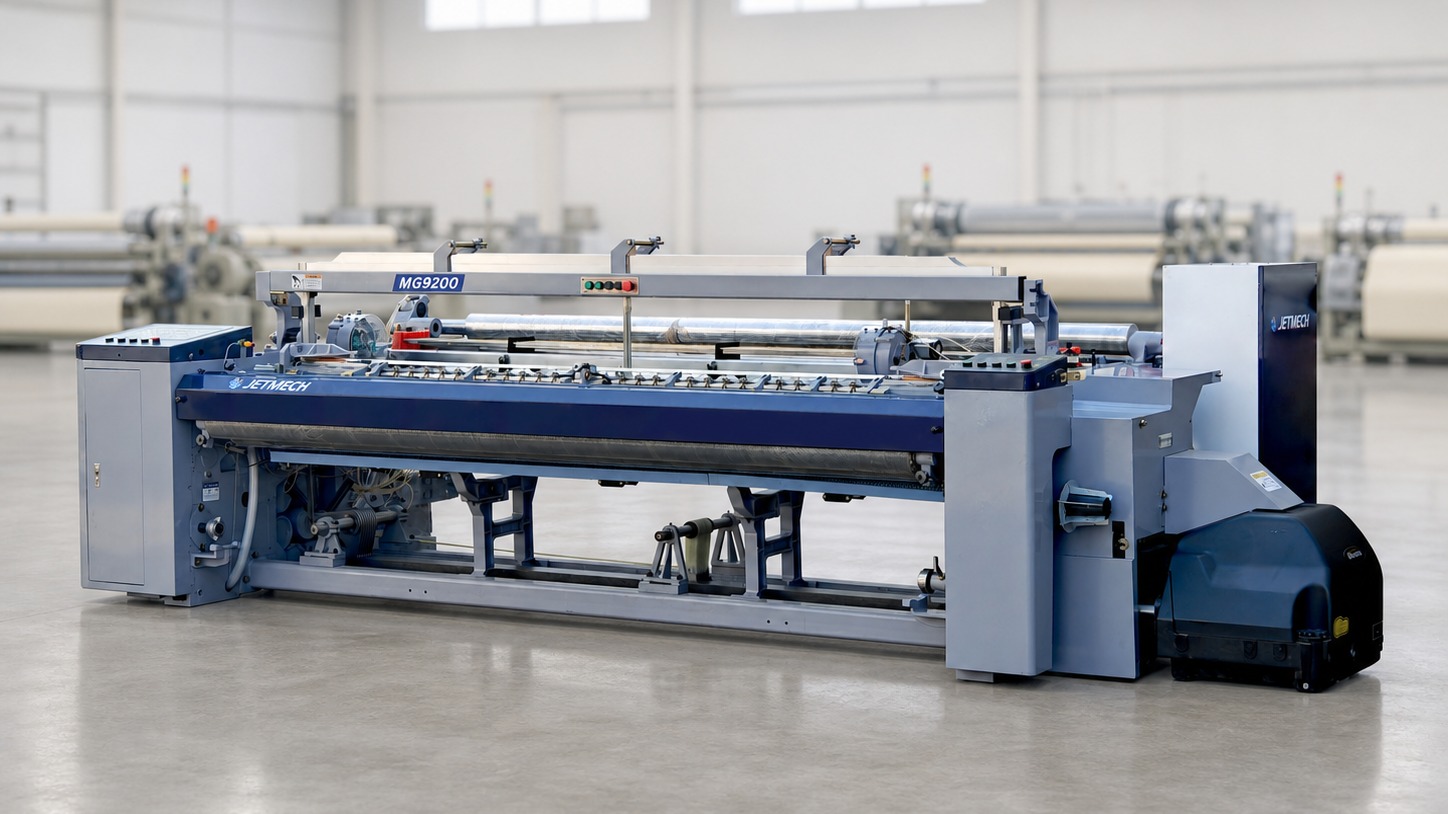
MG9200 Max Airjet LoomPatented beating shaft for stable, high-speed weaving.
MG9200 Max Airjet Loom
What Is MG9200 Max?
MG9200 Max is the upgraded airjet loom configuration built around JETMECH's patented beating shaft, also known as the sley shaft. This balanced shaft drives the reed with stable beat-up force, helping improve fabric consistency, reduce vibration, and support reliable high-speed weaving.
01
Core Technology
See how the patented beating system supports fabric consistency, lower vibration, and stable operation.
Patented System
Coaxial Central Dynamic Balance Weft Beating Shaft
The beating shaft is one of the most important systems in an airjet loom. It
determines beat-up force, weft density uniformity, vibration level, and long-term
weaving stability. JETMECH MG9200 Max uses a patented integrated beating shaft design
for quiet, stable, and high-speed performance.
Patent TechnologyZL20232***0910.5
Designed for powerful, uniform beat-up force across the full fabric width.
How the beating system works
The integrated beating shaft converts the loom’s drive motion into a controlled beat-up movement. Its coaxial, dynamically balanced structure distributes force across the reed width while limiting vibration at the shaft supports.
01
Balanced input
Coaxial geometry keeps the rotating mass centered through each weaving cycle.
02
Even transmission
The integrated shaft carries beat-up force continuously from the center to both ends.
03
Controlled beat-up
The reed reaches the fell line with repeatable timing and force at production speed.
01
Superior Rigidity & Strength
The integrated shaft body resists bending and torsional deformation, helping the reed maintain accurate alignment throughout repeated high-speed beating cycles.
Integrated Rigidity
The integrated shaft resists bending and torsion, keeping the reed accurately aligned during high-speed weaving.
02
High Weft Density Uniformity
Evenly distributed beat-up force supports consistent weft density across the fabric width, reducing visible bars and variation between woven sections.
Dynamic Balance
Coaxial balance keeps the rotating mass centered, reducing vibration for steadier operation.
03
Excellent Weaving Stability
Dynamic balance limits vibration at operating speed, supporting repeatable reed motion, steadier running, and reliable fabric formation over long production periods.
Even, Repeatable Beat-Up
Force is transmitted evenly across the reed width, supporting uniform weft density and stable fabric formation.
04
Longer Equipment Life
Lower vibration and smoother force transmission reduce stress on bearings, gears, and shaft supports, helping extend service intervals and equipment life.
Reduced Wear
Smooth force transmission lowers stress on bearings, gears, and shaft supports, helping extend equipment life.
Patented Shaft StructureIntegrated beating shaft for stable high-speed weaving
This real-machine view shows the patented beating shaft installed across the
full reed width. The integrated, dynamically balanced structure helps deliver
uniform beat-up force with lower vibration during high-speed operation.
02
Machine Overview & Project Fit
Check the core machine fit first, then review the frame option and real-machine service views.
Configuration at a Glance
Use these four points to check the basic machine fit before reviewing the systems below. Final reed width, shedding, nozzle/feeder layout, and drive package are confirmed from the fabric construction, finished width, number of weft colors, target output, and available compressed-air capacity.
Reed Width
190 / 260 / 280 cmOther widths are available for different fabric requirements.
Shedding
Crank / CamElectronic dobby is available for complex weave patterns.
Nozzle / Feeder Layout
2N/2F or 4N/2FN = nozzles; F = feeders; up to 8N/8F.
Main Drive
5 kW Servo MotorDirect-drive servo motor for stable operation.
Frame & Air Reserve Option
Heavy-Duty Frame with Up to Five Side Air Tanks
The optional side-mounted tanks provide reserve-air capacity close to the loom, helping limit short-term pressure variation during high-speed weft insertion. The required quantity is matched to reed width, yarn, target speed, and factory air supply.
Real Machine Views
Drive-side and warp-side views show the service areas and overall machine structure.
Drive Side
Drive-Side (Cam-Side) Exterior View
This exterior view shows the drive-side structure, side covers, and service-access area. Internal cam configuration is confirmed separately in the machine specification.
Rear View
Warp-Side Rear View
The rear view shows the back frame, warp-beam mounting area, and rear service aisle used for warp preparation and routine maintenance.
03
Component Systems
Follow the operating sequence from control and drive through weft insertion, fabric formation, and maintenance.
Control System & Drive (Power) System
Production settings are entered and monitored through the HMI. The servo main drive converts those commands into precise, responsive machine motion.
Electronic Control
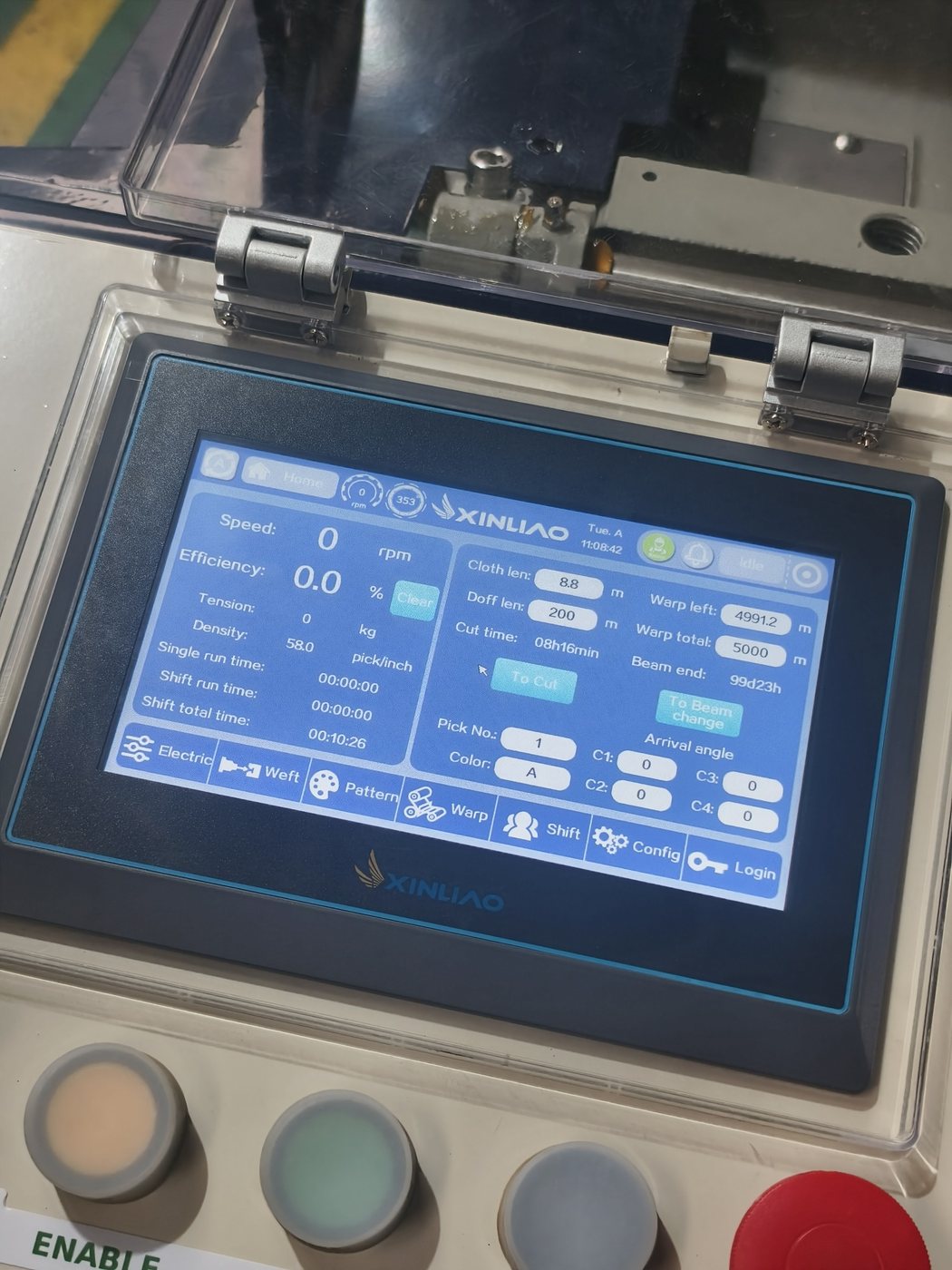
14-Inch HMI & Smart Control
The 14-inch Smart interface brings operating status, production data, and parameter settings together on one screen for clear day-to-day control.
Main Drive System
X Moto Servo Main Motor
The X Moto servo main motor follows speed commands with strong low-speed torque and fast response, supporting smooth, controlled operation.
Weft Insertion & Air Management
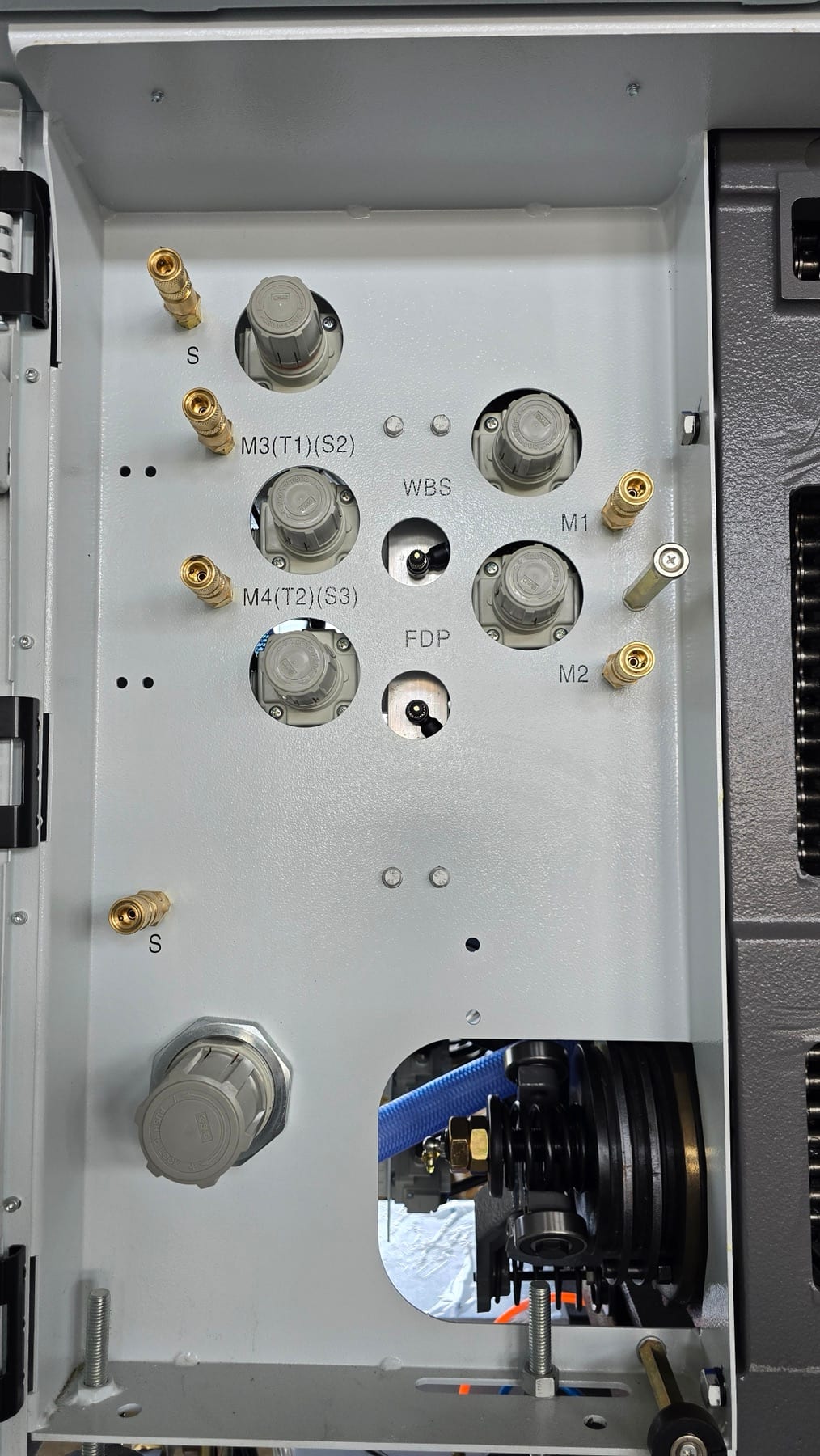
Pressure regulators, solenoid valves, the main nozzle, and relay nozzles work in sequence to carry the weft across the reed width with controlled pressure and timing.
Air Pressure Control
SMC Pressure Regulators
SMC regulators set the main and auxiliary air circuits independently to match the fabric and target speed.
Auxiliary Nozzle Control
SMC Solenoid Valves
SMC solenoid valves control auxiliary-nozzle timing precisely; one valve serves two auxiliary nozzles.
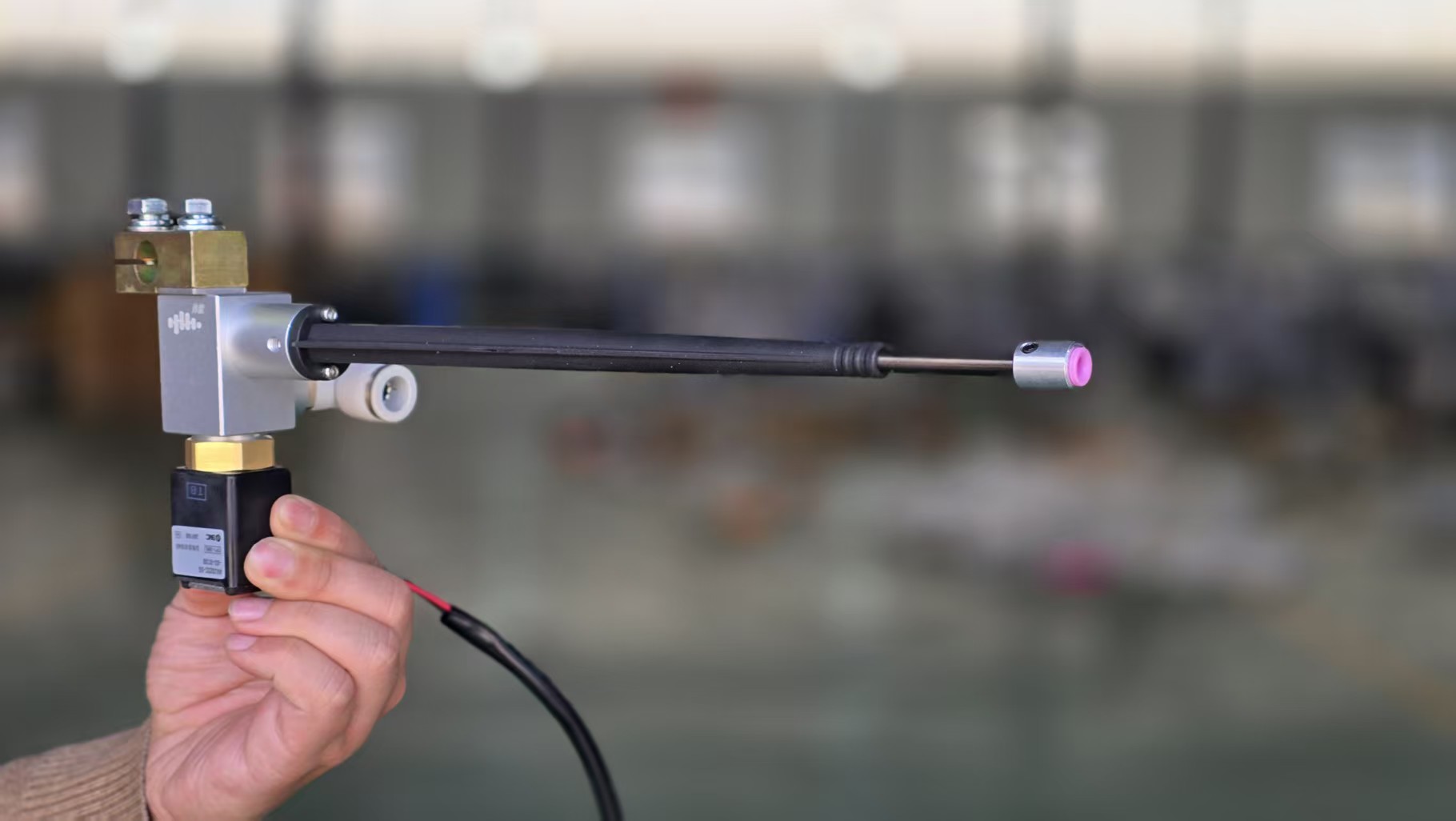
Main Nozzle System
Direct-Mounted SMC Main Nozzle
Direct-mounted SMC valve control improves airflow response. A ceramic tip increases wear resistance and nozzle life.
Air Insertion Parts
DLC Auxiliary Nozzles
Wear-resistant DLC coating provides more than twice the life of standard nozzles, reducing replacement frequency.
Fabric Formation & Maintenance
Heald frames, leno, cutting devices, and centralized lubrication support shed opening, selvedge formation, clean cutting, and scheduled maintenance.
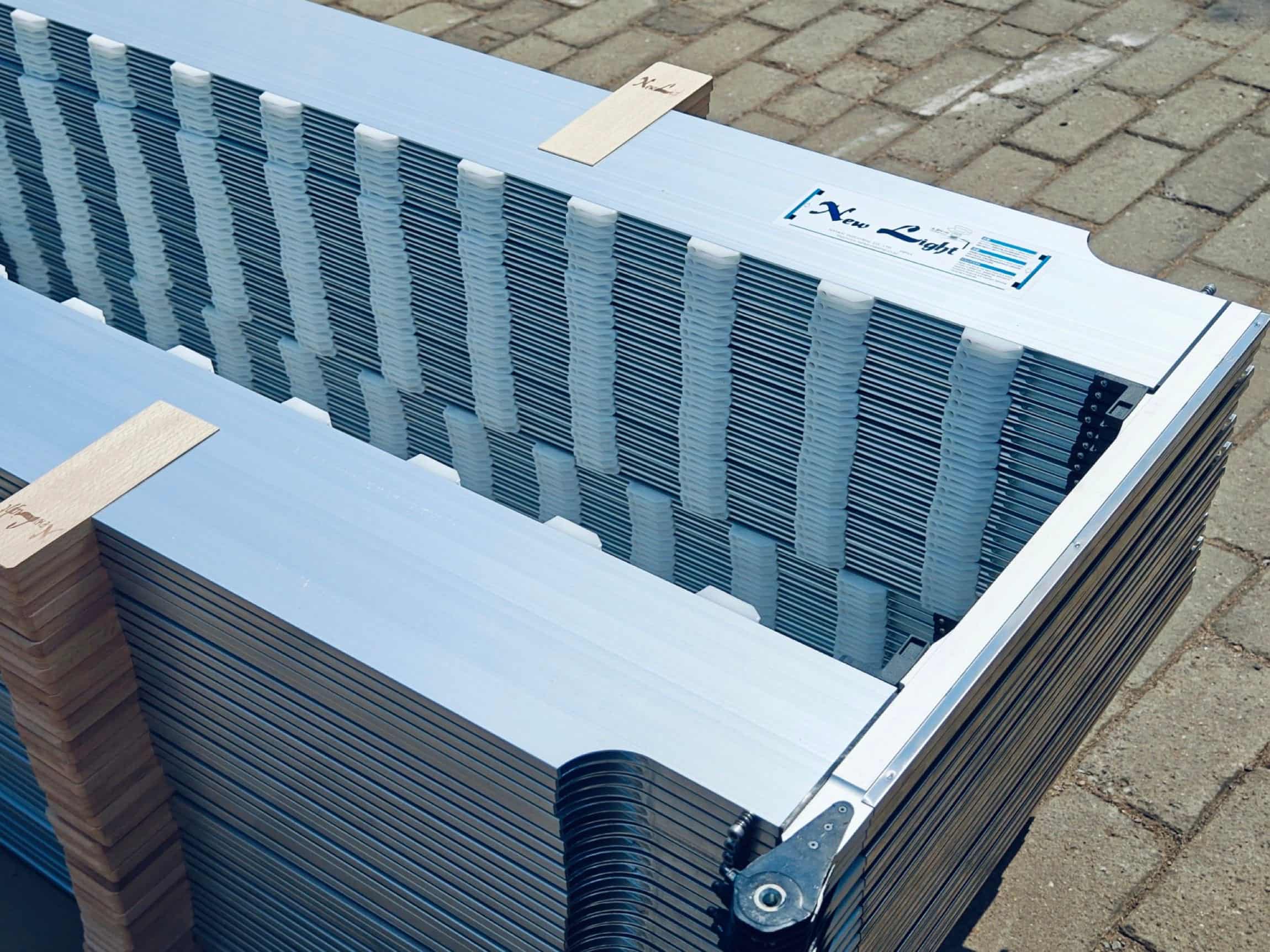
Shedding Frame
NEWLIGHT Heald Frames
Japanese NEWLIGHT frames provide accurate shedding with low inertia for reliable high-speed operation.
Selvedge Formation
Electronic Leno Device
Electronic leno motion secures the weft at the fabric edge for a cleaner, more stable selvedge.
Cutting System
Electronic Center & Selvedge Scissors
Electronic scissors match high-speed operation for clean cutting. A center cutter can be configured for wider machines.
Lubrication System
Automatic Central Lubrication System
The programmed pump supplies oil automatically, while the manifold distributes it evenly to key lubrication points for reliable long-term operation.
04
MG9200 Max Specifications & Configuration
Review the reference setup below to confirm the machine configuration included in the final quotation.
Status guide: Standard Reference means the current reference setup; Optional is not included unless quoted; Matched by Project is finalized from fabric and site data. The approved quotation and technical agreement govern final supply.
Core Machine Configuration
Item
Configuration
Body Type
Standard Reference
Integrated heavy-duty frame designed for stable high-speed air-jet weaving. Final body dimensions and floor-fixing details are confirmed with the approved machine layout.
Beating Shaft
Standard Reference
Patented coaxial central dynamic balance beating shaft system for low noise, stable high-speed operation, and consistent beat-up force.
Heald Frames
Standard Reference
8 NEWLIGHT heald frames (Japanese brand).
Electric Feeder
Standard Reference
2 electronic weft feeders, made in China.
Let-Off System
Standard Reference
Positive let-off system, servo-motor driven.
Take-Up System
Standard Reference
Servo-motor driven.
Controller System
Standard Reference
14-inch English HMI with intelligent interactive electrical control system.
Side Cutter
Standard / Optional
Mechanical cutter.
Customer check: Mechanical cutting is the standard reference; electronic center or selvedge scissors are optional and quoted when required.
Air System & Weaving Parts
Item
Configuration
Main Nozzle Valve
Standard Reference
Direct-mounted to the main nozzle for faster air response; original Japanese SMC valve.
Relay Nozzle Valve
Standard Reference
One solenoid valve controls two relay nozzles; original Japanese SMC valve.
Relay / Auxiliary Nozzles
Standard Reference
Wear-resistant DLC-coated nozzles with more than twice the service life of standard nozzles.
Air Pressure Regulator
Standard Reference
Premium Japanese SMC regulators for precise, energy-efficient air pressure control.
The quality and support points to confirm before approving the final quotation.
Key Quality Configuration
A range of key patented technologies supports stable machine operation at high speeds.
Wall-body bearings: original Japanese NSK / NACHI.
Two-year warranty for major structural components.
After-sales support includes one year’s supply of standard wear parts.
Ongoing online technical consultation and spare-parts supply support.
Confirm the Final Configuration
Share your fabric construction, yarn count, warp and weft density, finished width, number of weft colors, target output, and available compressed-air capacity. JETMECH will confirm all standard, optional, and project-matched items before quotation.
Review the machine views first, followed by the mechanical and electrical systems.
01 / JTM-508
Front View
This overall view shows the loom body, operator-side arrangement, fabric path, protective covers, and the space to allow for installation and daily access.
02 / JTM-508
Drive-Side Access View
This side brings together the warp let-off, fabric take-up, water-pump, and water-suction drives. Their coordinated operation helps maintain warp tension, even winding, consistent jet pressure, and effective water removal.
03 / JTM-508
Electrical Control Side
The electrical-cabinet side provides access to the controller, wiring, and related electrical components. Keeping this area clear makes inspection, troubleshooting, and service easier.
04 / JTM-508
Warp-Beam Mounting & Let-Off Area
The rear structure supports and aligns the warp beam for smooth, even warp delivery. Adequate rear access also makes beam loading, setup, and routine service easier.
Heavy-Duty Frame Structure
Heavy-Duty HT250 Gray-Cast-Iron Side Frames
The left and right HT250 gray-cast-iron side-frame assemblies weigh approximately 570 kg combined. Front and rear pentagonal connecting beams and eight floor anchors—four on each side—form a rigid base that helps maintain alignment and limit vibration during high-speed operation. Center supports and final anchor positions follow the approved installation drawing.
Frame / Transmission Side
Transmission-Side Cast Frame
This HT250 frame supports the transmission, beat-up, and bearing assemblies. Its mass, beam connections, and floor anchoring help maintain alignment under continuous high-speed load.
Frame / Opposite Side
Opposite-Side Cast Frame
The opposite-side frame and pentagonal support beams complete the rigid machine body. Center supports and approved anchor positions add installation stability.
Built for Long-Term, Stable Operation
A waterjet loom works in a humid environment, so long-term reliability begins with the machine body and its corrosion protection. JETMECH combines a heavy-duty body with 304 stainless-steel fasteners and protective covers. Phosphating, electrophoretic coating (E-coat), and three protective paint coats help resist corrosion and support dependable operation over time.
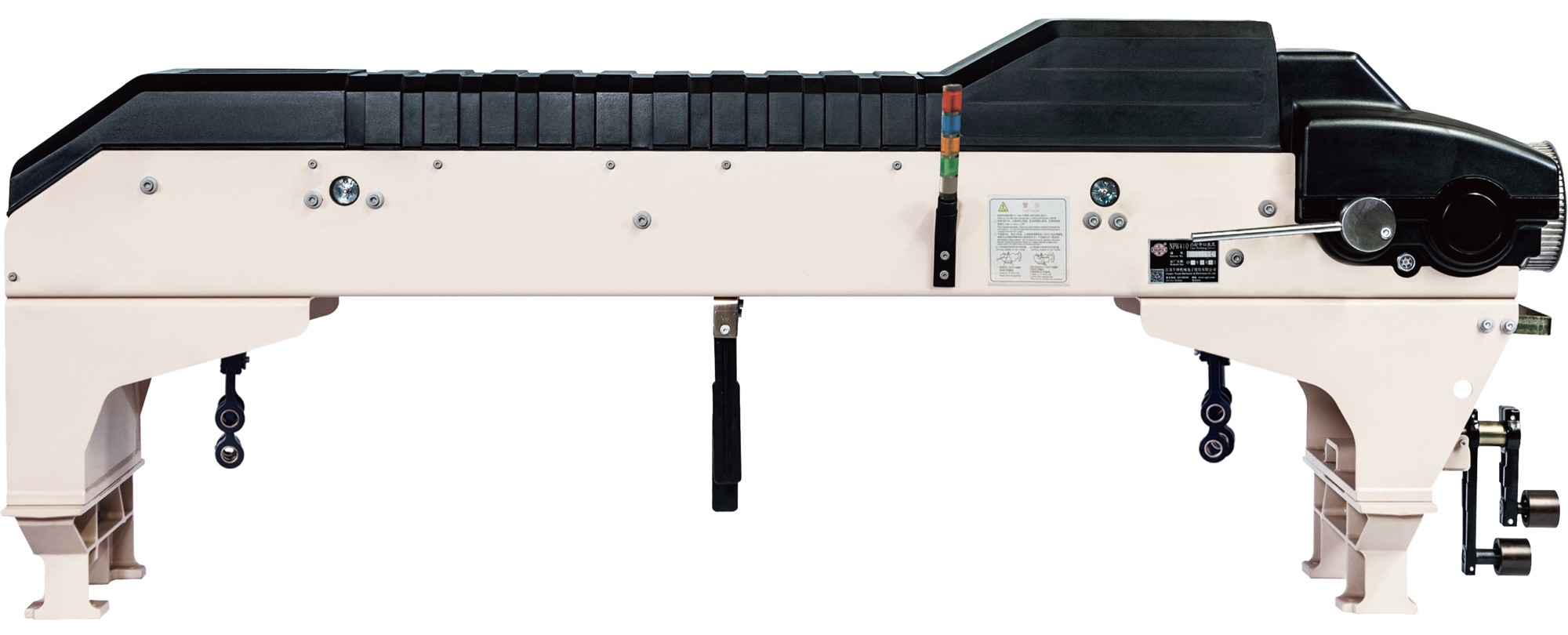
This table compares NPW410, NPW411, and LP409 cam shedding systems with the NP5400D electronic dobby. Crank shedding is a separate option for simple weave repeats. Final selection depends on weave structure, required heald frames, nominal reed space, and target speed.
Specification
NPW410 CAM
NPW411 CAM
NP5400D Electronic Dobby
LP409 CAM
Nominal reed space
190–360 cm
190–360 cm
190–390 cm
190–360 cm
Supplier-rated maximum speed
1,000 rpm
800 rpm
750 rpm
800 rpm
Heald-frame pitch
14 mm
14 mm
12 mm
14 mm
Maximum heald frames
Up to 10 frames
12 frames
Up to 16 frames
Up to 12 frames
Heddle length
260 or 280 mm
260 or 280 mm
330 mm
260 or 280 mm
Shed opening
56–113 mm
56–113 mm
58–142 mm
56–113 mm
Pattern-repeat capacity
12 picks
12 picks
12,800 picks
12 picks
Quick guide: nominal reed space is the maximum supported machine width, while usable fabric width depends on the fabric and setup. Heald-frame count and pattern-repeat capacity indicate pattern flexibility; shed opening is the warp-yarn opening stroke.
The unit shown is NPW410. Values are supplier ratings for the shedding device, not guaranteed loom production speeds. Actual JTM-508 output depends on fabric construction, nominal reed space, weft yarn, shedding system, and machine settings.
Core Mechanical Systems
Mechanical systems for stable, efficient, and long-lasting weaving
01 / Weft Insertion
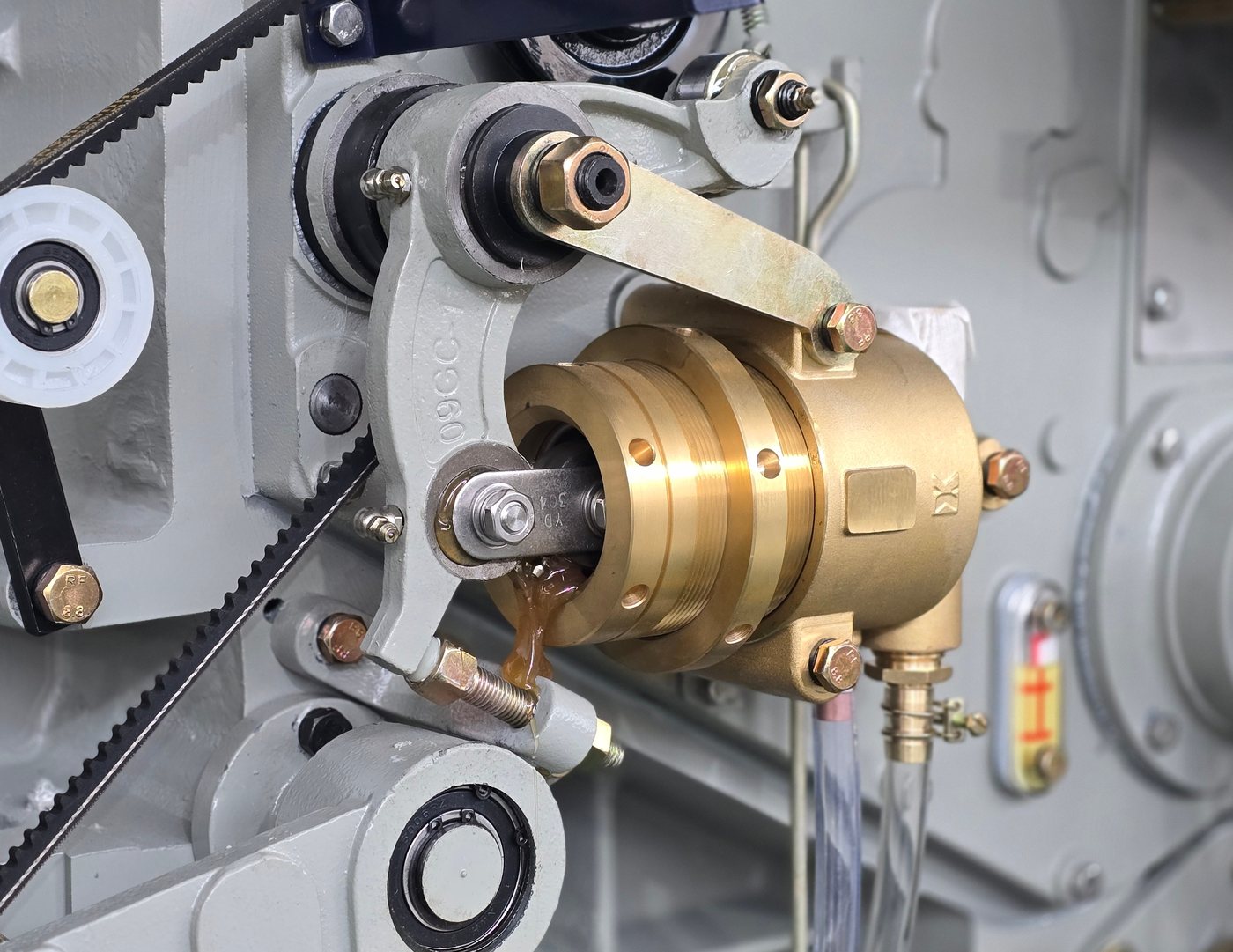
Water Pump & Brass Fittings
The water pump produces the controlled high-pressure pulse required for weft insertion. Pump model, plunger diameter, and brass fittings are matched to reed width, weft yarn, fabric construction, and target speed.
02 / Selvage System
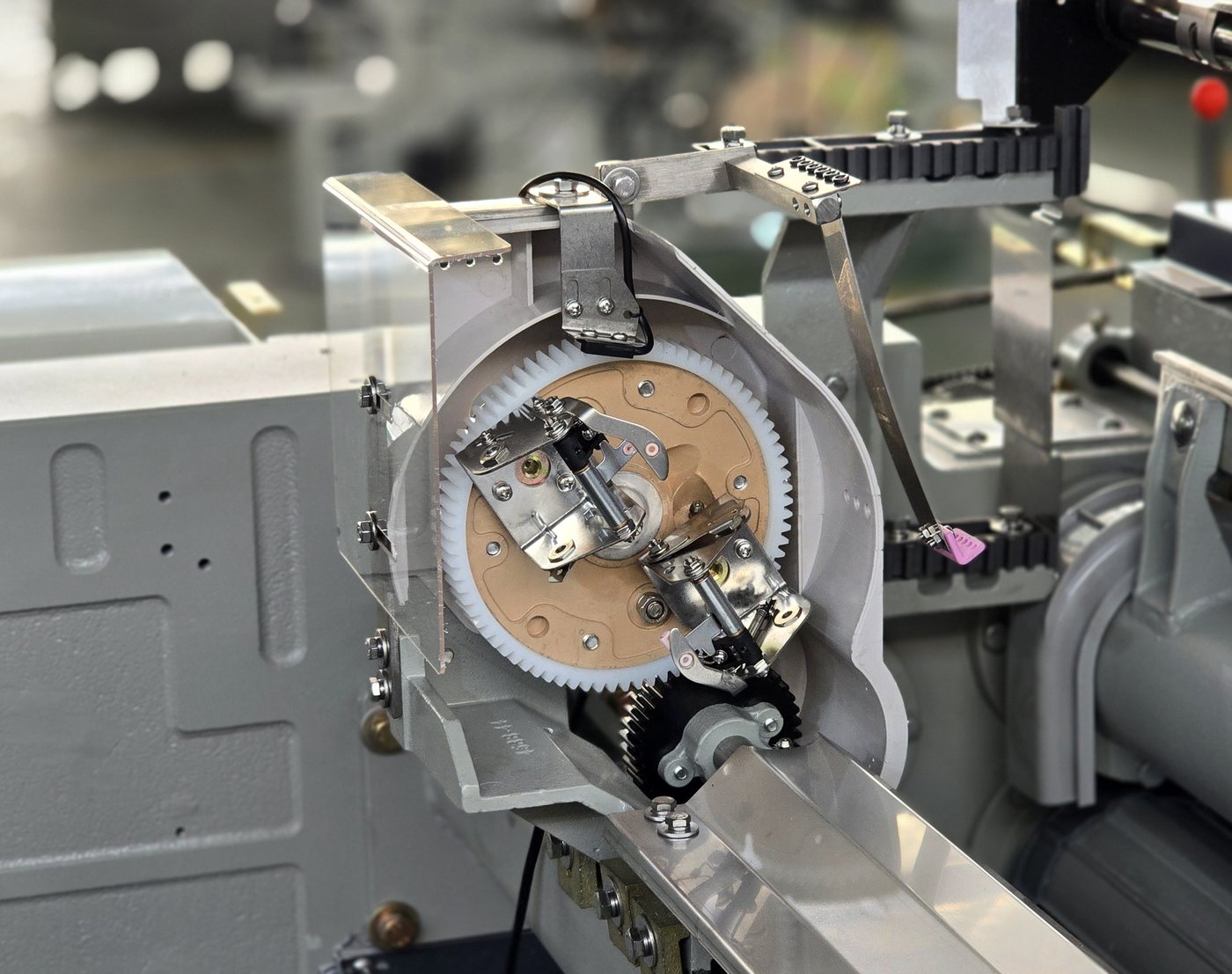
Planetary Leno Selvage Device
Installed near the fabric edge, the leno device interlaces selected warp ends to form a stable selvage. Its setup is matched to the fabric construction and required edge structure.
03 / Transmission System
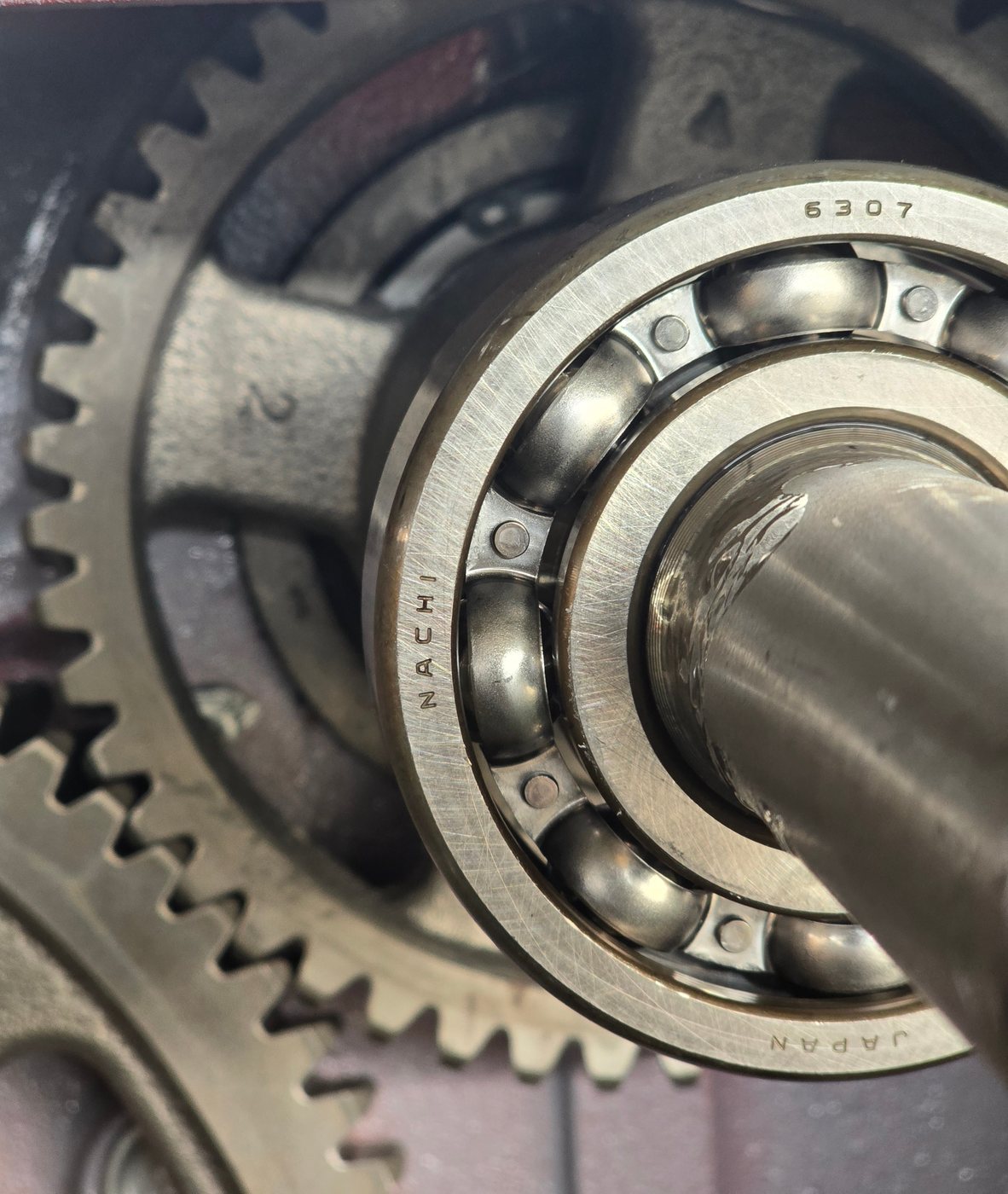
NSK / NACHI Main Drive Bearings
NSK or NACHI bearings are used for the main drive shafts inside the transmission gearbox. Their precision and durability support smooth power transmission and stable high-speed operation.
04 / Fabric Width Control
Six-Ring Temple Assembly
Positioned close to the cloth fell, the temple controls weaving width and helps reduce fabric draw-in. The ring and needle arrangement is matched to the fabric construction.
05 / Weft Insertion
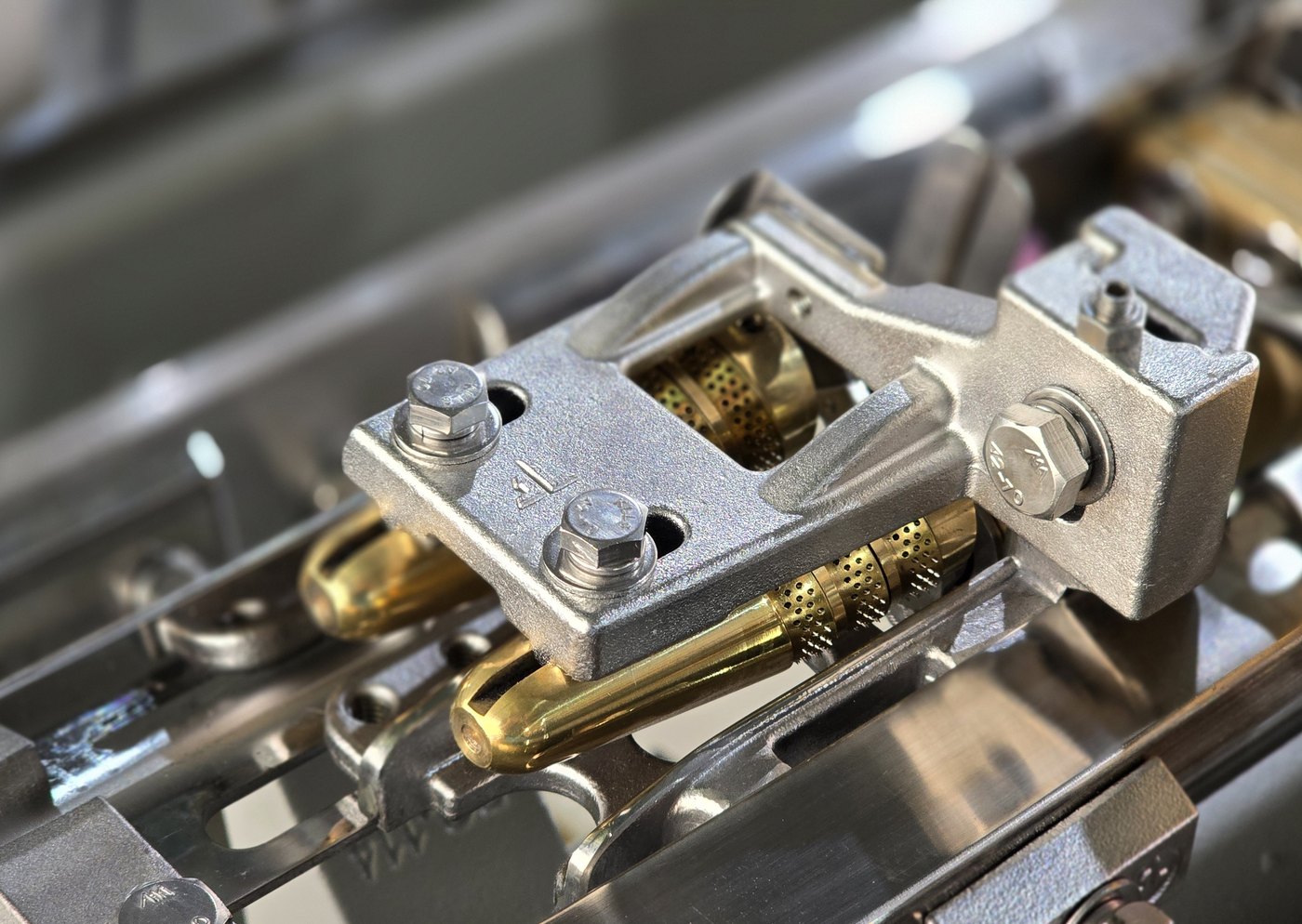
CNC-Machined Nozzle Holder & Guide Assembly
The precision-machined nozzle holder maintains nozzle position and jet direction. Pump setting, nozzle size, and timing are matched to reed width, weft yarn, and operating speed.
06 / Water Removal
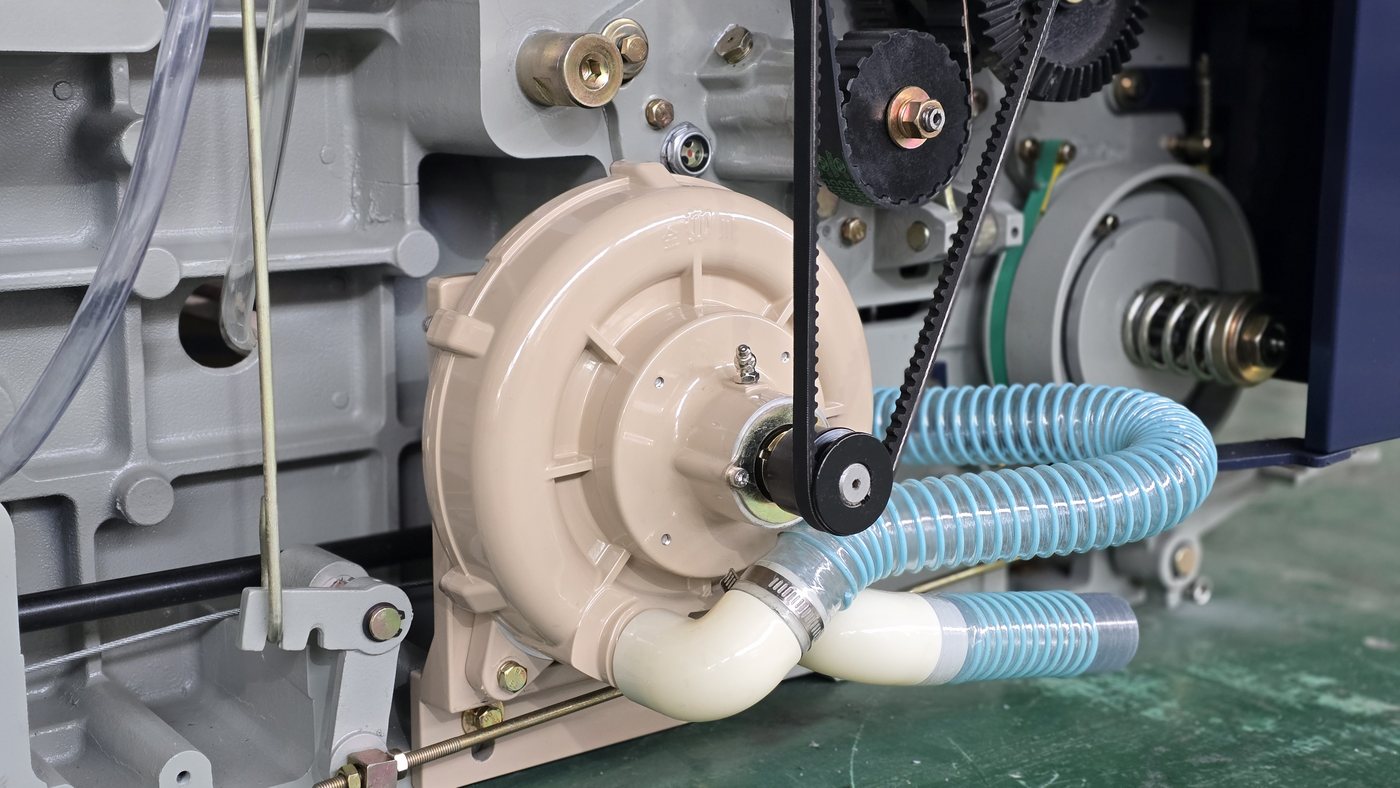
Aluminum-Alloy Water-Suction Blower
The blower removes residual water after weft insertion. A Ø65 mm SS304 suction pipe and stainless-steel tray form a durable, corrosion-resistant water-removal path.
Control & Drive Systems
Intelligent control, precise feeding, and efficient direct-drive systems
07 / Machine Control
English-Language HMI & Diagnostics
The HMI displays speed, production data, alarms, and key operating parameters. Integrated diagnostics support efficient setup, troubleshooting, and routine operation.
08 / Weft Preparation
Electronic Weft Feeder
The electronic feeder measures and stores the required weft length, then releases it at the programmed timing. Feeder quantity is confirmed with the customer according to the fabric design and required weft arrangement.
09 / Weft Insertion
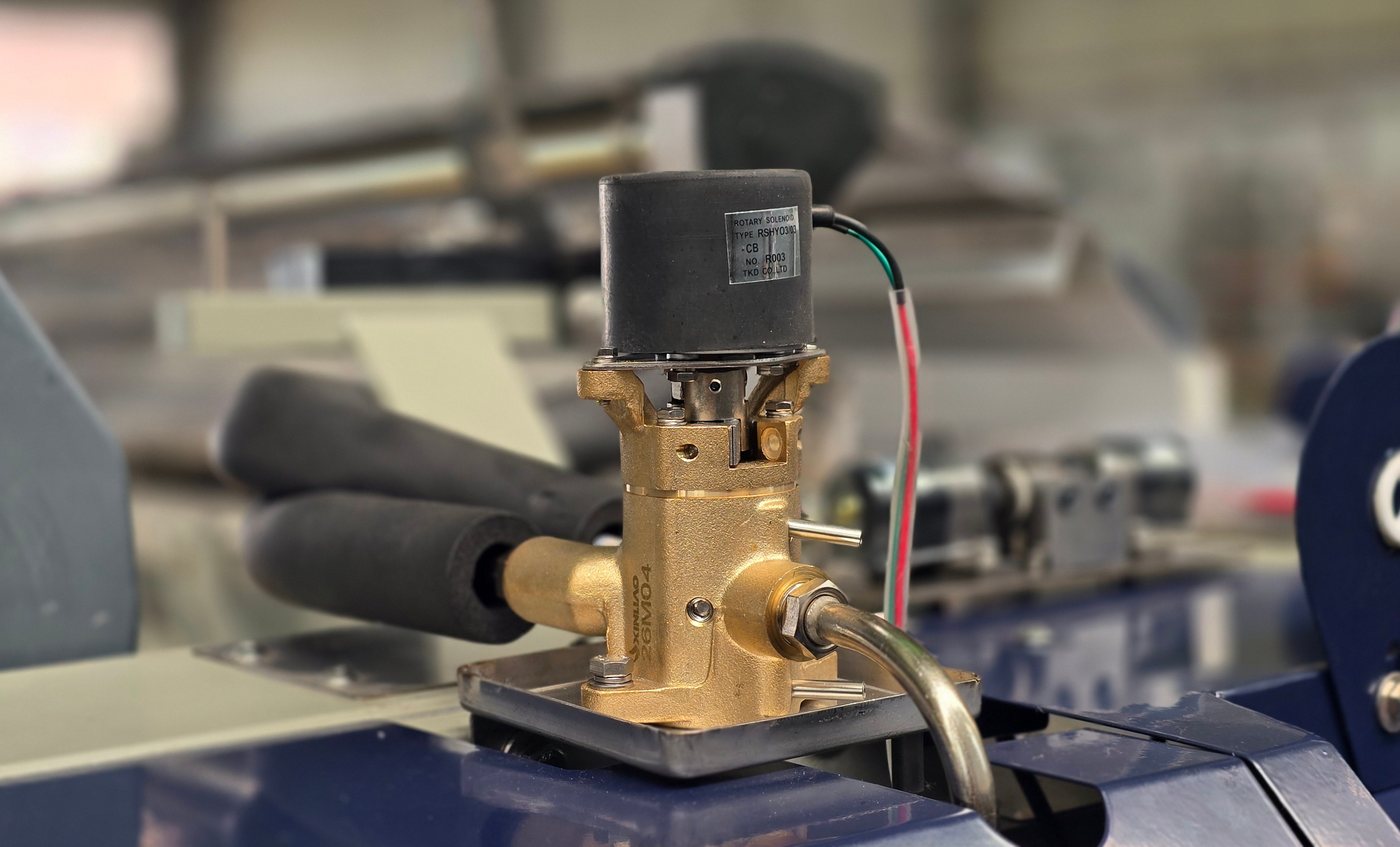
Water-Jet Solenoid Valve
Installed in the water circuit, the valve selects the required jet line in step with the loom control. Its specification is matched to pump output, nozzle size, operating pressure, and the selected weft arrangement.
10 / Timing Control
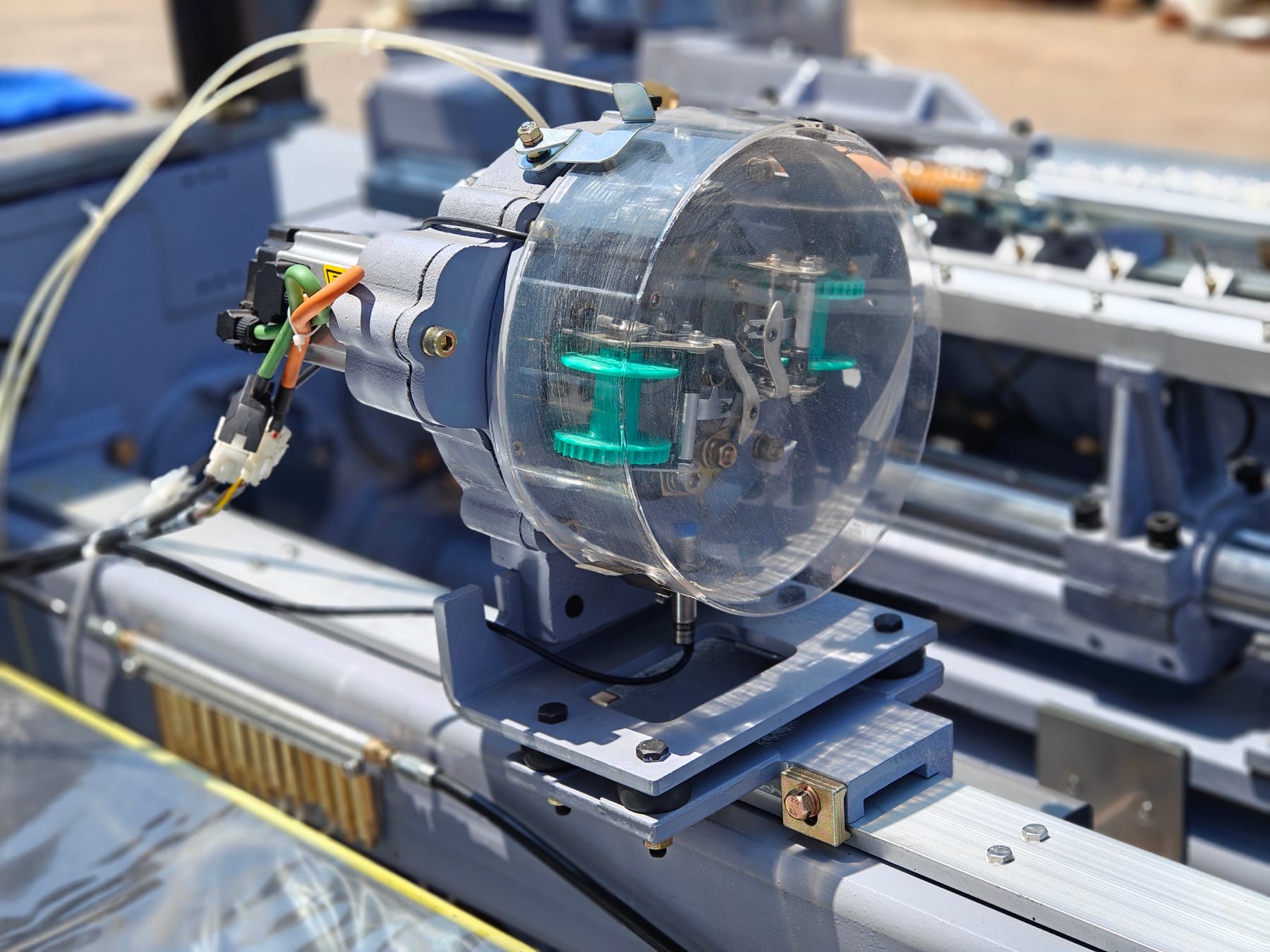
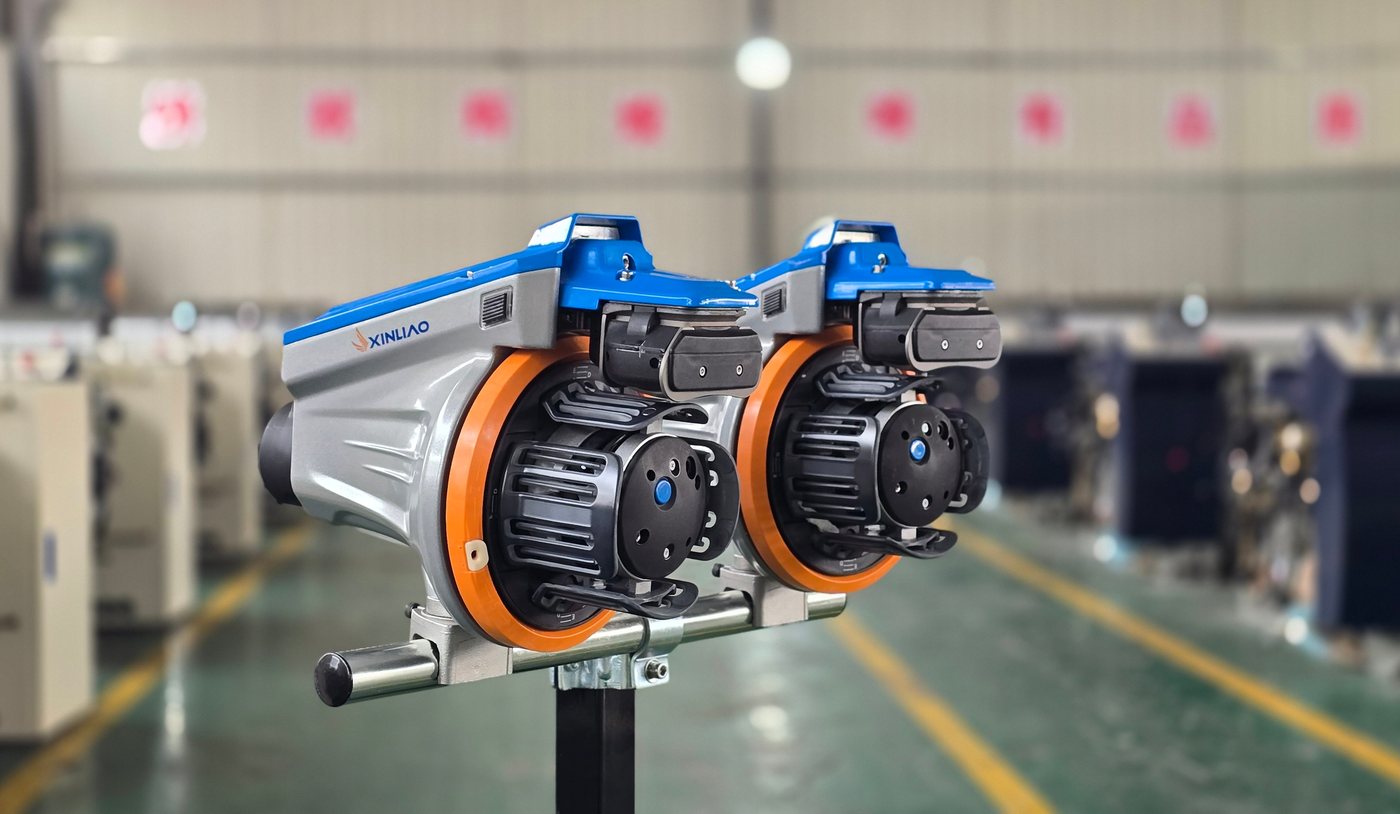
Main-Shaft Angle Encoder
Mounted on the main-shaft timing assembly, the encoder reports shaft angle to the controller for synchronized feeder release and water-jet actuation.
11 / Warp & Cloth Control
Electronic / Mechanical Let-Off & Take-Up
Electronic let-off regulates warp delivery as beam diameter changes, while electronic take-up maintains programmed pick density. Mechanical let-off and take-up are also available to suit the production plan.
12 / Main Drive
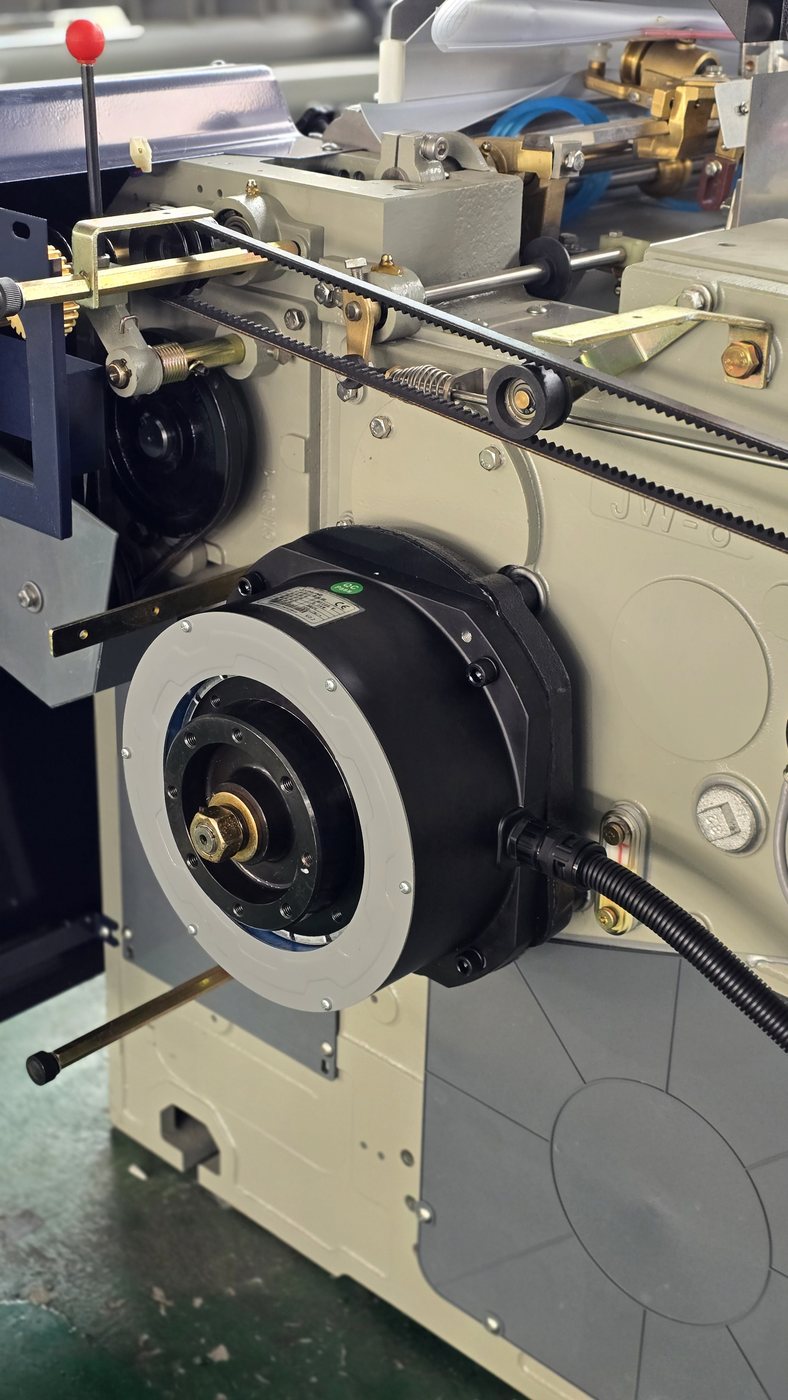
5.5 kW Direct-Drive Main Motor (X-Motor)
Mounted directly on the main shaft, the X-Motor eliminates the conventional main-drive belt; auxiliary belts may remain in other mechanisms. Fewer main-drive parts can reduce transmission losses, energy use, vibration, and routine maintenance.
02
Key Parameters
Core options customers usually confirm before final model selection and quotation.
Two XINLIAO electronic weft feeders are the standard reference; final quantity is confirmed according to the fabric design.
Heald Frames
8 / 10 / 12 frames, selected according to the weave pattern and shedding system.
Let-Off / Take-Up
Mechanical or electronic let-off and take-up, selected according to fabric and production requirements.
Main Motor
5.5 kW direct-drive X-Motor or conventional belt-driven motor.
Weaving Systems & Control
Beat-Up Shaft
Ø114 mm coaxial beat-up shaft for uniform reed motion across the weaving width.
Main Bearings
NSK or NACHI bearings, made in Japan, for the frame and transmission gearbox.
Back-Rest Roller
Ø113 mm roller with stainless-steel surface.
Water Suction
Ø65 mm SS304 suction pipe with aluminum-alloy blower and stainless-steel water tray.
Leno & Temple
Planetary leno selvage device and six-ring temple assembly, matched to the fabric edge and weaving width.
Protective Covers
Stainless-steel machine-body covers and stainless-steel electrical-panel cover.
Center Supports
190 cm: one support with two anchors; 280 cm: two supports with four anchors.
Corrosion Protection
Main frame treated by phosphating and electrophoretic coating, followed by protective surface coating and exterior finish paint; stainless-steel fasteners are used.
04
Components & Order Notes
Brand references and quotation details to confirm before final order discussion.
Main Components
Water pump: JL or XK, brass body.
Nozzle and valve plate: MDH, Korea.
Pump return spring: SHUNDING, Taiwan-made.
Oil seals: TTO, Taiwan.
Frame and gearbox bearings: NSK or NACHI, made in Japan.
Auxiliary-mechanism belt: CHUNGUANG.
Protective covers and electrical-panel cover: stainless steel.
Before Quotation
Please confirm fabric construction, weft yarn, reed width, shedding system, heald-frame count, pump/nozzle arrangement, feeder quantity, let-off/take-up, motor, factory voltage and frequency, and machine color.
Buyer Knowledge
Airjet Loom Technical Guides
Clear, practical explanations to help weaving teams understand the systems, settings, and operating checks behind a stable air-jet weaving process.
Start here if you are buying a waterjet loom for the first time. These guides explain how the machine works, which fabrics it suits, what to compare, and how to maintain it.
Textile machinery buyers need more than a picture. JETMECH supports the discussion from
fabric application to machine configuration and export quotation.
Product Selection
Separate waterjet and airjet loom options by raw material, fabric type, and production target.
Configuration Support
Discuss key requirements such as reed width, shedding system, let-off, take-up, and optional devices.
Quotation Workflow
Prepare clear communication for machine model, quantity, packing, delivery time, and payment terms.
Application-led loom selectionMatch waterjet or airjet loom specifications by fabric material, reed width, yarn condition, and production target.