
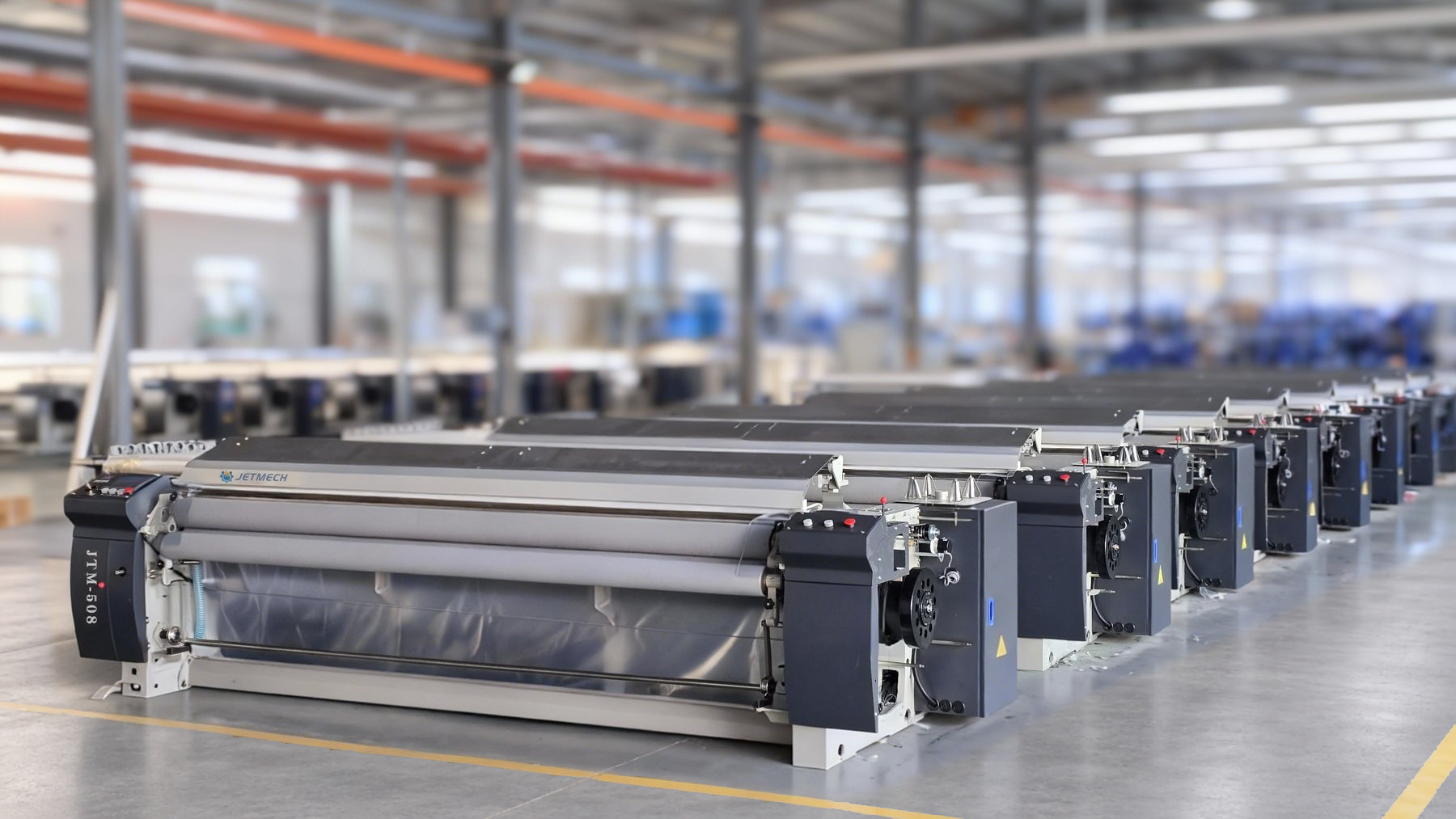
The water carries the weft; it is not simply sprayed onto the yarn. For a JETMECH JTM508 project, fabric suitability comes first, followed by the working width, weave, insertion system and factory water arrangements.
THE WEAVING CYCLE
How waterjet weft insertion forms the fabric
The feeder prepares the required weft length while the shedding motion opens a path between the warp yarns. The pump and nozzle deliver a timed water pulse that carries the weft across this opening. Weft detection, beat-up, cutting and edge formation complete the pick.
Warp let-off and fabric take-up coordinate tension and fabric advance. Reliable weaving therefore depends on the whole cycle, not on the nozzle or pump alone.
WATERJET OR AIRJET
Choose the insertion process for the yarn
Waterjet weaving is primarily suited to hydrophobic continuous filaments, particularly polyester and nylon. Pure cotton and linen are not standard applications for this wet-insertion process.
An airjet loom inserts weft with compressed air and is a candidate for cotton, suitable blends and other yarns, subject to the confirmed configuration. Neither method is best for every fabric: yarn preparation, width, density, weave and finishing requirements determine the choice.
WATER AND FACTORY CONDITIONS
Plan the water circuit as part of the project
Water supply, filtration, removal and drainage belong in the production plan. Local water conditions must be reviewed alongside the pump and nozzle requirements and the intended fabric appearance.
Treatment or recirculation arrangements need a project-specific review. They should not be assumed to be included in the loom price, or to work without checking the local water source and factory requirements.
CONFIGURATION AND QUALITY
Evaluate the machine against your production task
The JTM508 model identifies the product range, but the quotation defines the machine you will receive. Confirm shedding, insertion, tension control, drive, electrical control and service items for the actual fabric.
Discuss fabric appearance, usable width and a practical output target together. A headline speed without its yarn, fabric and operating conditions is not a complete basis for purchase.
Not sure whether waterjet or airjet suits your fabric?
Send JETMECH the yarn specifications, fabric construction and required width. We can review the process choice and explain the configuration points to confirm.